 Dr. Kelly Brownell is the Robert L. Flowers Professor Emeritus and Dean Emeritus of Public Policy, Professor Emeritus of Psychology and Neuroscience, and Director Emeritus of the World Food Policy Center at Duke University. Dr. Brownell joined Children and Screens’ National Scientific Advisory Board in 2022 in support of the Institute’s work filling “an important gap” in protecting children, particularly amid rising exposure to social media.
For decades, his work at the intersection of academia, research, and policy has focused on the harms children face from unhealthy food and marketing environments, and more recently, the role social media plays in shaping those challenges.
In this spotlight, Dr. Brownell shares his experiences working across these different sectors, the importance of translating research into actionable guidance, the need for fundamental changes to the environments children develop in, and the difficulty of enacting lasting change.
From Research to Action
Dr. Brownell’s training is in psychology, and his earliest work involved researching treatments for obesity at the University of Pennsylvania. According to Dr. Brownell, the results of these trials became discouraging early on, spurring him to the conclusion that “weight issues were better prevented than treated.” This kick-started his career examining solutions for public health from a policy perspective.
Since then, Dr. Brownell has advised governmental agencies and officials, the White House, and other leaders in nutrition, obesity, and public policy, while serving as a faculty member at Penn, Yale, and Duke University.
This work has not been without its own challenges. Reflecting on his work with governmental agencies, Dr. Brownell has a sobering take: “When corporate interests and public health collide, corporate interests always win in the U.S.” Part of the problem, according to Brownell, comes from the mistaken belief among researchers that “you can have legislative or administrative gains that will help curb the problem. That almost always fails because corporate interests are too powerful.” Dr. Brownell further notes that “you get little victories here and there, and in general the little victories you get are the ones the food industry lets you have.” In the face of these setbacks, Dr. Brownell sees two important avenues for change: litigation against the food industry and the application of “strategic” research.
Past lawsuits against tobacco and opioid companies by state attorneys general, and recent lawsuits brought against major food companies give Dr. Brownell hope that meaningful progress can be made to improve the food environments children are exposed to. He believes these lawsuits reflect growing public frustration with the government’s limited success in reining in industry–a trend he feels parallels the push against the tobacco industry decades earlier.
Dr. Brownell sees progress in this area as timely and critical. “Children are exposed to massive amounts of food marketing,” he explains, “and it’s almost all for unhealthy food. Companies are very resourceful in bypassing parental oversight, and the marketing is definitely accomplishing the aims of the industry, which is to get children to want and pester their parents for their products.”
For scientists and researchers looking to make headway–both on children’s health and more generally–Dr. Brownell emphasizes the value of what he calls “strategic research.” The main idea is that research should be planned to connect with important policy questions in order to provide findings that are more targeted and more likely to support meaningful change. His own paper outlining the process and value of “strategic research,” “Strategic science with policy impact,” co-authored by Dr. Christina A. Roberto, was born out of concern that “science wasn’t having enough impact.” Dr. Brownell hopes that such efforts can help spur findings to support better policy for children’s health, and also suggests the importance of researchers documenting the impact of negative diet on health and other factors affecting child health. Dr. Brownell explains “all of these things are really important to provide an evidence base for making policy decisions.”
Children are exposed to massive amounts of food marketing, and it’s almost all for unhealthy food. Companies are very resourceful in bypassing parental oversight, and the marketing is definitely accomplishing the aims of the industry, which is to get children to want and pester their parents for their products.

The Value of Collaboration
Dr. Brownell joined Children and Screens’ National Scientific Advisory Board in 2022, after seeing that the Institute was “filling an important gap in the defense of children in the face of this avalanche of exposure to social media.” Since joining, Dr. Brownell has continued to be impressed by the Institute’s work. He points to its “thoughtful, careful, ethical approach, as well as the extent and quality of its outreach and the open-minded attitude about different approaches to pressing issues.”
Through his interactions with fellow Advisory Board members and the Institute’s work, Dr. Brownell has deepened his understanding of two issues that now inform his own work: social media and addiction. (For example, Dr. Brownell co-edited the book Food & Addiction: A Comprehensive Handbook alongside fellow Advisory Board member Marc Potenza and fellow co-editors Dr. Ashley N. Gearhardt and Dr. Mark S. Gold.) Learning about these topics from fellow Board members has expanded his own understanding about their potential links to food and child health.
Since joining the Advisory Board, Dr. Brownell has participated in much of the Institute’s outward-facing work, including making a guest appearance on an episode of the Screen Deep podcast and moderating the #AskTheExperts webinar “Online Marketing and Children’s Eating Habits.” Dr. Brownell is also a member of the newly-formed Evidence Council, which provides evidence-based recommendations on pressing topics on the intersection of digital media and child development. Dr. Brownell sees value in having input from a diverse group of experts weighing in on timely questions, particularly in the interest of distilling existing research into potential public policy recommendations.
Building Healthier Environments for Children
To address the harms children currently face from unhealthy food marketing and social media, Dr. Brownell says there’s a need to “do everything possible to create a healthy set of defaults.” Dr. Brownell cites examples of these “defaults” already impacting children’s health, including how physical environments and socioeconomic factors can affect children’s access to healthy food and their ability to safely exercise outside. In addition, he sees a need to change the “default” food environment American children are exposed to: “portion sizes are too large; there’s a tidal wave of marketing for unhealthy foods; healthy foods cost more than unhealthy choices; the companies are manipulating the products to make them maximally attractive, tasty, and rewarding from a biological point of view; and that just begins the picture.”
Simultaneously, Dr. Brownell argues there are harmful defaults for American children’s exposure to social media. With social media, Dr. Brownell explains, “The defaults are a free-for-all where companies can do whatever they want. It’s a completely unhealthy default.” Together, strategic research, meaningful accountability, and healthier default environments represent, in Dr. Brownell’s view, some of the most promising paths toward improving children’s health and well-being.



From the Desk of the Executive Director
Stay in the loop with the latest from Children and Screens! Kris Perry, Executive Director, shares updates and insights alongside our newsletter, ScreenShots.
Children and Screens Announces Nearly $150,000 Research Grant to Study AI Companions and Adolescent Well-Being
Awarded in conjunction with the 2025 Digital Media and Developing Minds Congress Interdisciplinary Research Congress
ON-GUARD People with Lived Experience and Stakeholder Committee Workshop
Wednesday, November 4, 2026 | Virtual | Hosted by ON-GUARD

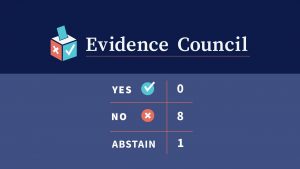
Experts Vote 8–0 Against Phones and Tablets in Children’s Bedrooms Overnight
Children and Screens Evidence Council finds strong consensus against allowing devices in children's bedrooms overnight