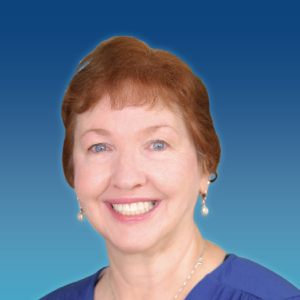
 Colleen A. Kraft, MD, MBA, FAAP is Professor of Pediatrics at the Keck School of Medicine/University of Southern California and Children’s Hospital Los Angeles. She has served on Children and Screens’ National Scientific Advisory Board since 2019 and is a member of the Evidence Council. She has also contributed to the Handbook of Children and Screens and participated as both moderator and panelist in multiple #AskTheExperts webinars.
Dr. Kraft is widely recognized for her work integrating care for children with developmental disabilities and behavioral health conditions into primary care, as well as for her interests in how technology intersects with child health disparities and unconscious bias in children.
Career Path and Early Influences
Asked why she decided to become a pediatrician, Dr. Kraft relates an anecdote from her childhood. Growing up the oldest of six siblings, Dr. Kraft started to “read” to her younger siblings at a very early age–knowing just enough to know when to turn the page and about the story itself, and through this experience learning to decode at a young age. As a member of the first Head Start class, she recalls a formative moment when a teacher encouraged her to pursue medicine–an idea that stayed with her. She later attended medical school, and went on to focus on pediatrics, describing it as a natural fit.
Fast-forward to the 1980s, Dr. Kraft began a private pediatric practice, which she maintained for two decades. Early in her career, she observed inconsistencies in child care health practices and began working directly with staff at a local center to improve areas such as infection control, nutrition, and safety. What began as informal guidance evolved into a set of structured protocols that were later adopted more broadly at the state level.
This experience helped shape her long-standing focus on community-based pediatric care and health equity.
Expanding Beyond Clinical Care
While she enjoyed private practice, over time Dr. Kraft became more involved “at the project and grassroots level” working with schools, child care, sports teams, and other organizations. She explained, “as a pediatrician, you have a lot of clout in the community–and as I’ve told my interns, you know more than 99% of people about child health and what child health means.”
Dr. Kraft became particularly involved in working with families with children with developmental disabilities and behavioral health problems. Many of these families needed extra support to navigate the health care system while caring for their children’s needs.
Meanwhile, Dr. Kraft also worked with families who did have the health care and financial resources and knowledge they needed. This inspired Dr. Kraft: “What if I could get a group of family navigators together and we could hire them to reach out to some of these families just starting with the health care system? Then everybody wouldn’t have to reinvent the wheel.” Dr. Kraft received initial grant funding for this new program through her practice, and in 2002 started a 501(c)(3) called Medical Home Plus. “Twenty five years later,” Dr. Kraft explains, “this is actually becoming a part of the system, having families who are experts help out other families who are coming into the health care system.”
Leadership and Systems-Level Impact
“I was always interested in what was happening above and beyond just medical care for kids–in schools, what are the policies, what do we need to be involved in as child health professionals,” said Dr. Kraft. In 2006, she became president of the Virginia Chapter of the American Academy of Pediatrics (AAP), working with schools, legislatures, and through Head Start, bringing a “pediatric voice” to this work.
In 2009, Dr. Kraft joined Virginia Tech to help start their pediatric residency training program at their newly-established medical school. She then joined Cincinnati Children’s Hospital Medical Center to help with an Accountable Care Organization, working to “use the Medicaid financing system to address social determinants of health.” Then, in 2016, she was elected president of the national AAP, which she led in 2018.
Following her tenure as president of the AAP, Dr. Kraft then joined Children’s Hospital Los Angeles, where she now leads the IMPACT Program, guided by the idea that “while you learn to take care of these kids medically, can you take care of them socially, can you look at what else they need in terms of health and health disparities? That’s been what I’ve done all of my career.” Dr. Kraft notes that when she began her work in the 1980s, such considerations were seen as secondary when treating children–but today, Dr. Kraft notes that it’s more broadly understood that “if you’re going to be a community-based pediatrician, you need to look at social determinants of health.”
I was always interested in what was happening above and beyond just medical care for kids–what were the policies in schools, and what do we need to be involved in as child health professionals.

Digital Media and Child Development
As Dr. Kraft’s career evolved, so too did the impact of screen use on the children she’s worked with. One area of particular concern for her continues to be screen exposure for young children, especially for children ages 0-2 years old whom, Dr. Kraft notes, should have no screen time except for interacting with loved ones via video chat. “When you go into a room now and a child starts crying, the first thing a lot of parents do is pull out a phone to put on a video, or pull out an iPad. It’s to the point where if I have a parent who is pulling out a book, or playing ‘I Spy’ I am congratulating them, telling them ‘I am so thrilled that you are finding ways to interact with your child’ because that is what a child’s brain needs to develop.” She notes further that the trend of using screens to soothe children is of particular concern, as it interferes with the development of self-regulation skills: “What these kids need to learn to do in terms of self-regulation is modeled by a parent–there needs to be more of that.”
Another point of tension for Dr. Kraft comes from screen time cutting into children’s physical activity. While she describes being encouraged by families who are intentionally keeping their children away from screens, she notes the trend of children getting addicted to screens–and in turn preferring screen use to outdoor play. “A typical child, before they get addicted to screens, would much rather run around and play–so we talk with parents about things you can do with your child outside, physical activity, and my families who are already there will tell me that.” Dr. Kraft recognizes the difficulty this can pose for parents: “It is harder: you have to be there, you have to have your eye on that child, but it is so much better for their motor development and for their weight.” Dr. Kraft even describes the concerning trend of babies eating while watching a screen. To address these concerns, Dr. Kraft talks with parents about what activities they can have their child do besides using screens, in particular encouraging outdoor play and physical activity.
Additionally, Dr. Kraft notes the concerning influence of social media use, which she explains “has become a big social determinant of health for kids five to ten years old. There’s been an explosion of platforms, kids’ phone access, and a lack of human interaction with children glued to phones, interacting with predatory algorithms.”
[Social media] has become a big social determinant of health for kids five to ten years old. There’s been an explosion of platforms, kids’ phone access, and a lack of human interaction with children glued to phones, interacting with predatory algorithms.
Advice for Future Pediatricians
For students looking to get into the field of pediatrics, Dr. Kraft notes there are many subspecialties within the field, so students should “look and see where your interest is.” She also notes that “there is advocacy throughout the system,” opportunities for pediatricians to note the concerns they see with their patients and to speak up to reduce harms and further improve health outlooks for the patients they serve.
Engagement with Children and Screens
When asked about what first drew her to joining the National Scientific Advisory Board in 2019, Dr. Kraft explained it was in part the concept behind the Advisory Board–and the Institute itself: “The idea that bringing together the basic science research plus the education of the public, plus the policy piece–that’s where you’re going to get everything done.” She notes being impressed with the members in those fields, and the enthusiasm to do “deep dives” on those areas, “and being able to not only highlight some of the best research but put on some of the webinars that were very educational and to influence some of the policy going on.”
One highlight for her has been participating–both as a moderator and as a speaker–in the Institute’s #AskTheExperts webinar series, and “getting to hear from some of the experts in these areas, as well as the parents.” Dr. Kraft moderated “Social Media and Drugs: What Parents Need to Know” and “Social Media Exposed: Where to Go From Here?” She was a panelist for “Digitally Disconnected: Understanding the Digital Divide during COVID-19.”
“It’s been very insightful to get to know these people, to hear their stories and some of the policy work involved.” On the policy end, Dr. Kraft reflected fondly on the opportunity to introduce Senator Marsha Blackburn (R-TN) and Senator Richard Blumenthal (D-CT) at the 2025 Digital Media and Developing Minds International Scientific Congress at the policymaker awards ceremony, where they were presented with the Children and Screens Award for Leadership in Children’s Digital Well-Being.
The Role of the Evidence Council
Dr. Kraft is also a member of Children and Screens’ newly-formed Evidence Council, which provides guidance on pressing issues surrounding children and digital media by providing vote-based positions. Dr. Kraft is one of nine members of the inaugural committee. When asked why she thinks the Evidence Council’s work matters, she explained, “The whole idea of the Evidence Council is to bring together voices who are experts in different areas to come to a consensus on some of [these issues]. There’s a lot of back-and-forth, in terms of what is best…I think it’s really good to highlight some of the specific opinions that people have on these things so we’re then able to come together on a consensus.”
In the most recently-released Council decision, on whether cell phones should be banned all day in K-12 schools, which came down to a 7-2 split in favor, Dr. Kraft dissented. Speaking about her position, Dr. Kraft explained, “There’s a lot of evidence that says not having phones during instructional time is really helpful, but sometimes kids need them in between, depending on where they live.” In her full comments, Dr. Kraft suggests cell phone restrictions should be developed in collaboration with parents, school personnel, and students.
Looking Ahead: The Future of Child Health
Reflecting on what work needs to be done to improve health outcomes for today’s children, Dr. Kraft says it’s important to “start with early childhood: no screens before two.” On a general note, Dr. Kraft suggests broader efforts should be made to decrease the need for screens in homes. “Screens are like junk food. They’re okay every now and then, but to have them on all the time is not good. That’s what we have to work on with our parents and kids.”
“The other part of that is to have the option” to not use screens. Dr. Kraft cites the example of a family living in a dangerous neighborhood, where outdoor play is not feasible. “What do we do for those kids to provide them with an alternative?”
She sees a large role for policy to address the issue screen use can create for children, and is encouraged by recent litigation directed toward holding social media companies accountable for the harms their platforms can cause for youth. “The things they were able to hide behind before are now being challenged.”
However, “There are things that need to change. [Social media companies] need to be held responsible for the privacy of the user, and policing involved [for harmful content]. There need to be safeguards so the platforms are not as predatory as they currently are.”
Looking more broadly, Dr. Kraft explained, “All of this is health–it’s children’s health, it’s looking to the future to see what are some of the opportunities and threats for kids. We need access to health care. There’s a role in digital health to help, but what’s happening now is a lot of companies have investors and want to make a profit on their tool or device, and are pricing out the market, so how do we work with that piece as well, and do things that help to push health equity.” While the intersection of child health care, screen use and digital health care tools run “the gamut of topics from direct health care to what happens when kids are home, early child development to teens and social media and harm–it’s all pediatrics, it’s all health.”



Policy Update: April 2026
Stay up-to-date on the latest legislative developments related to children and digital media with "Policy Update" in Children and Screens' monthly newsletter ScreenShots.
Board of Advisors Spotlight: Colleen A. Kraft, MD, MBA, FAAP
Dr. Kraft shared her insights with Children and Screens as a part of a Board of Advisors Spotlight in the April 2026 issue of ScreenShots, Children and Screens' monthly newsletter.
ScreenShots
Children and Screens' monthly newsletter, your essential guide to the latest news, expert insights, and resources from the Institute.
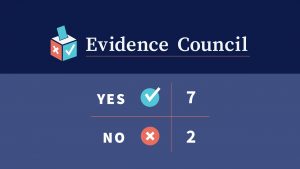
Experts Vote 7–2 in Favor of Bell-to-Bell Smartphone Bans in Schools
Children and Screens Evidence Council finds strong support for full-day restrictions, with calls for flexibility and further research
Children and Screens’ Screen Deep Podcast Nominated for 2026 Webby Award, AskTheExperts Webinar Series Honored
Vote for the nominated episode by April 16, 2026
ReThink Citizens’ “ReThinking Digital Parenting Virtual Nationwide Workshop”
April 23, 2026 | Virtual