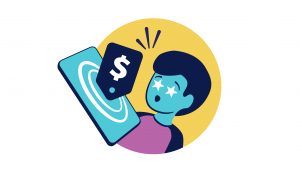
In today’s digital world, children see advertising almost everywhere online – from social media and video games to streaming platforms and websites.
Across all platforms, advertisements are more personalized than previous decades, with different users seeing different ads. Repeated and personalized exposure to online ads can be especially influential to kids because their thinking, decision-making, and self-control skills are still developing.
Many online platforms leverage data collection and AI to facilitate highly personalized, targeted advertising to users. Because children and teens can be sensitive to social validation, exclusion, and reward-based incentives, they are uniquely vulnerable to these strategies.
How Ads Appeal to Children’s Emotions
Advertisers target youth by appealing to and manipulating their emotions – using humor, nostalgia, insecurity, or excitement – to encourage youth to buy more products, content, and experiences.
In video games, advertisers may use how children feel when they win or lose a challenge to push products. For example, a game might offer paid hints or skips when a child is stuck on a level. Games that use “pay-to-play” features might also target the mood boost kids feel when they win or succeed. Because kids’ ability to regulate their positive and negative emotions is still developing, they are especially vulnerable to this emotion-driven advertising.
Youth are also highly sensitive to social influence and connection, especially in adolescence when the desire for peer acceptance grows. Advertisers take advantage of this by framing products as a means to fit in or gain social status. Some ads are also designed to create FOMO (fear of missing out).
Many children and teens form emotional bonds with digital characters and online influencers. These one-sided connections are often called parasocial relationships. These relationships can be used by advertisers to encourage more online spending. For example, characters or influencers promote products to young people either directly (e.g., labelled sponsored posts) or through entertainment content (e.g., videos that seem like regular content but include product placement).
How Kids’ Data is Used to Target Ads
Children’ s data (e.g., location, age, likes) is constantly collected online. This information allows for targeted online advertising to kids. Algorithms on these platforms use kids’ data to show ads that align with their online engagement. For example, a teen who engages with video game content (e.g., gameplay videos) will likely see ads for new games, consoles, and accessories later on.
Advances in AI allow advertisers to not only collect and analyze user data, but to also create content. This AI-generated content is often highly personalized and engaging. As a result, it becomes harder for kids and teens to resist buying (or asking their parents to buy) products.
What Can Parents Do?
How can parents help their children and teens navigate targeted advertisements?
-
- Have shared media experiences – look and talk about these advertisements and promotions together.
- Help kids understand how some paid promotions and ads are not clearly labeled, and teach them how to recognize hidden ads on digital platforms
- Remind your kids that advertised depictions of products or experiences might be different in reality
- Ask your child how these advertisements and promotions make them feel. Discuss ways to navigate those feelings.
- Build AI and algorithmic literacy skills. Empower kids and teens by helping them understand how and why algorithms and AI are used in advertising online.
- Focus on pay-up-front video games, instead of games that are often free to play but may involve in-game purchases, loot boxes, and pay-to-win design features.
The marketing kids encounter today in the digital world is made more powerful by seductive technologies and by unregulated commercial surveillance, which allows advertisers to access and exploit a child’s specific hopes, dreams, strengths, weaknesses and vulnerabilities.

Protecting Children In the New World of Online Advertising
Tips to help families understand the scope and impacts of the new world of online marketing to kids

Influencers and Kids: The Power of Online Personalities | Liselot Hudders, PhD
Hidden Costs: Protecting Kids from Online Financial Exploitation
From influencer advertising, manipulative persuasive design, video game loot boxes, and even illegal financial extortion – children face a digital minefield designed to capture their money and their trust.

Data Privacy and Children
A visual digest of current research on data privacy and children
How Toxic Food Marketing Affects Child Health | Kelly Brownell, PhD

How are Children Impacted by Deepfakes?
How are deepfakes created? How might kids be affected by deep fakes? What can parents and caregivers do?
How Do Advertisers Target Kids Online?
Why are children and teens particularly susceptible to the influence of persuasive advertising? In what ways do advertisers prey on young people’s emotions and desire for peer acceptance? How do algorithms on digital platforms use the data they collect from youth to show targeted ads?

Does Digital Media Use Affect Kids' Physical Health?
How does digital media use affect kids' physical health and development?

What is Sharenting?
What is “sharenting”? Are there benefits? What are the risks? How can parents post about their kids safely?

What is Sextortion?
What is sextortion and how does it work? What makes sextortion dangerous for youth? How can parents protect their children from sextortion?

What is Technoference?
How does mobile technology affect parent-child relationships? Are kids and parents both affected by these digital distractions?