
Humans of all ages are increasingly relying on AI chatbots as intimate and always-supportive social companions. What are the costs of this reliance on “pretend empathy” when it comes to the development of social abilities and our expectations of human empathy and relationships? On this episode of Screen Deep, host Kris Perry explores these questions with Sherry Turkle, PhD, MIT Professor and author of the new book, Artificial Intimacy: Who We Become When We Talk to Machines. Dr. Turkle discusses the implications of human-like chatbots for children’s developing understanding of empathy and connection, and the societal impacts of accepting AI’s performance of these traits as replacements for the real thing.
Listen on Platforms
 About Sherry Turkle
Sherry Turkle is the Abby Rockefeller Mauzé Professor of the Social Studies of Science and Technology at MIT and the founding director of the MIT Initiative on Technology and Self. A leading expert in humans’ relationship with digital objects, she continues to revolutionize our understanding of the role of technology on psychology and culture. She is the New York Times bestselling author of Alone Together,Reclaiming Conversation, and The Empathy Diaries. Turkle is a recipient of a Guggenheim Fellowship, a Rockefeller Humanities Fellowship, the Harvard Centennial Medal, and is a member of the American Academy of Arts and Sciences. She received a joint doctorate in sociology and personality psychology from Harvard University and is a licensed clinical psychologist.
In this episode, you’ll learn:
-
- How reliance on “artificial intimacy” with AI chatbots erodes our capacity for human care, tolerance, and empathy
- Why constantly supportive AI tools make it more difficult to have real relationships which require navigating conflict or a different perspective
- The dangers to children – and society – of growing up thinking machine relationships can replace human ones
- How the business incentives behind AI tools encourage deeper attachment for profit
- Why use of AI chatbots for therapy, which may provide short term support, cannot replicate a caring human therapist
- How use of social media for emotional comfort has acted as a “gateway drug” to a more toxic attachment to chatbots
Studies mentioned in this episode, in order of mention:
Turkle, S. (2026). Artificial intimacy: Who we become when we talk to machines. Little, Brown & Company. https://www.hachettebookgroup.com/titles/sherry-turkle/artificial-intimacy/9780316573962/
Mei, Q., Xie, Y., Yuan, W., & Jackson, M. O. (2024). A Turing test of whether AI chatbots are behaviorally similar to humans. Proceedings of the National Academy of Sciences, 121(9). https://doi.org/10.1073/pnas.2313925121
Turkle, S., & Potter, K. (2015). Reclaiming conversation: The power of talk in a digital age. Penguin Press. https://sts-program.mit.edu/book/reclaiming-conversation-power-talk-digital-age/
Konrath, S. H., O’Brien, E. H., & Hsing, C. (2011). Changes in dispositional empathy in American college students over time: A meta-analysis. Personality and Social Psychology Review, 15(2), 180-198. https://doi.org/10.1177/1088868310377395
Konrath, S., Martingano, A. J., Tolman, R. M., Winslow, M., & Bushman, B. J. (2024). Random app of kindness: Evaluating the potential of a smartphone intervention to impact adolescents’ empathy, prosocial behavior, and aggression. Psychology of Popular Media, 13(3), 338–352. https://doi.org/10.1037/ppm0000478
Turkle, S., & Merlington, L. (2011). Alone Together: Why We Expect More from Technology and Less from Each Other. Basic Books. https://www.hachettebookgroup.com/titles/sherry-turkle/alone-together/9780465093663/?lens=basic-books
Turkle, S. (1978). Psychoanalytic politics: Jacques Lacan and Freud’s French revolution. Basic Books. https://mitpress.mit.edu/9780262548175/psychoanalytic-politics/
Piaget, J. (1952). Piaget, J. (1952). The origins of intelligence in children (M. Cook, Trans.). W. W. Norton & Company. https://doi.org/10.1037/11494-000
[Kris Perry]: Welcome to Screen Deep, where we decode young brains and behavior in a digital world. I’m your host, Kris Perry, Executive Director of Children and Screens. We know from prior Screen Deep guests that AI chatbots will listen without getting impatient and offer reassurance without judgment. We know that for many children and adolescents, they are quickly becoming companions, confidants, and sometimes romantic partners. But what happens when youth begin to prefer AI to another person? Might a young person lose the empathy and connection that comes with real human relationships?
Few people have been thinking about our relationship with technology and what technology is doing to our human relationships longer than today’s guest. Dr. Sherry Turkle is the Abby Rockefeller Mauze Professor of the Social Studies of Science and Technology at MIT and the founding director of the MIT Initiative on Technology and Self. For decades, she has studied how technology changes what we do and how we understand ourselves and relate to one another. Her newest book, Artificial Intimacy: Who We Become When We Talk to Machines, warns that relying on AI chatbots may negatively impact humans’ capacity for empathy, caring, and connection.
Today, we’ll talk about what children learn from relationships with machines that are designed to please them and how we might preserve the experiences that young people need for healthy development. Welcome to Screen Deep, Sherry.
[Dr. Sherry Turkle]: I’m delighted to be here.
[Kris Perry]: There’s so much buzz about your new book, Artificial Intimacy, so I thought I’d just dive right into the piece that seems top of mind for most:AI chatbots. They’ve come so far in the past couple years, and people young and old are relying on them for deeply personal conversations and answers to questions about complex human relationship challenges. Some of the responses generated by AI chatbots seem right on the money in terms of demonstrating a nuanced understanding of human problems and proposing solutions. What is the fundamental difference between an AI chatbot performing functional acts of empathy and care and actual human acts of empathy and care that might be worded in exactly the same way?
[Dr. Sherry Turkle]: That’s the question. Do we care about any authenticity in our interpersonal experience? I mean, we had a little talk before the show. You expressed appreciation for sort of the arc of my work. I feel that you really are interested in me. And I’m gonna do a better job because of it. And I’m probably going to want to keep up the contact. I feel that I, somehow, have been expanded in some way and will be by this empathic conversation. And I know about you. And you can call me when you have a question about something, and I have a lot of info and a lot of history.
None of that is true if you have a cool little back-and-forth with an AI chatbot. And the question is do we care about our relationships with real people in the real world who care about our real lives, who’ve known the arc of a human life, who’ve known what it is to be little and to grow up but to still have some of the insecurities of being little, to know what it is to fear illness, to worry that your child is ill, that your mom is ill? I mean, all of these experiences that the AI is pretending empathy about, but has no empathy about. And in my research on chatbots, what I’m discovering is that for so many people, pretend empathy becomes empathy enough. And that’s the real crisis that we’re at, is what is the end game?
I always like to ask, “What is the end game in a world where pretend empathy becomes empathy enough?” And I see no upside. When you put it starkly and you say, “You can invest in a world where people will be given situations and support to interact more with real other people versus a world where we’re going to push and resource pretend empathy being empathy enough,” what are we trying to achieve in that second? And people tell me, “People are lonely, they need something, they can’t be alone, this makes them feel better.” If the resources that were going into – just at my institution, MIT – to develop chatbots, were put into youth centers, senior centers, music programs, art programs for the community, we might feel that the idea of talking to a chatbot was like, why?
The problem is, is that we see a problem, a problem of loneliness, and we somehow get it – which technology exacerbated, by the way – and then we think that only a technological solution will help. And to me, the epitome of this is Mark Zuckerberg gave an interview where he said, “Americans would like to have 15 friends, but they can’t have 15 friends. They can have three friends. And Meta is going to give them the delta 12 – those extra 12 friends that they would like to have will be avatars that will be pleasing to them, sycophantic, will make them feel good.” That’s the end game in the view of the people who are bringing this to us.
And so I think the burden of proof is on the people who want to push that end game rather than on the people who say, “Hold on a second, let’s think this through.” Because pretend empathy is not the same as real empathy. Because when you put away that chatbot, the chatbot does not care if you commit suicide or make yourself dinner. And that is not a friend, it is not a companion, it is not a support system. Anyway, other than that, Mrs. Lincoln, did you like the play?
[Kris Perry]: I’m really glad you mentioned the word friends because you reminded me that social media has essentially changed the definition of friend or friendship to be something technical, that doesn’t build on that long history that you develop from the very earliest stages of life where you’re empathizing or being empathized with, and that’s how you develop the skills to even be a friend, and you hold the history of that other person and you reflect back to them that history, which is I guess getting at the neuroscience, the foundation of empathy that revolves around how our brains mirror others, right? What happens neurologically or psychologically when there isn’t human physiological mirroring, but just a facsimile of it.
[Dr. Sherry Turkle]: Yes. And I think that this notion of – what happens when pretend empathy is empathy enough? The first thing that happens is you define empathy down to what a machine can do. So empathy becomes, “When I talk to ChatGPT, really about anything, like, I try to do all kinds of things with it. I’m about to give a big lecture. It’s really very important. There’s a lot of people in the audience, I’m a little anxious.” “Sherry, you’ve got this. You’re the most fabulous. Hydrate. Meditate.” You know, only good. And we start – and when I interview people about why they’re so attached to their chatbot, why they like it better than their wife, they give me reasons like that. It’s like, “I come home at the end of the day and it says something nice to me.” Sort of these gestural things. We start to think that empathy are these behavioral signs, these superficial behavioral utterances of what real empathy would be.
And then the second thing that happens is that we start to get annoyed at people when they don’t behave like machines. Because all of a sudden the friction in real life interactions, the, “Well, I don’t see it exactly that way.” It’s hard. And the main – I would say that from all of this interviewing about people and their relationship with chatbots, the thing that comes up most often is, “I do not want to be vulnerable. And this gives me a pathway to relationships in which I don’t want to be vulnerable.” But there is no intimacy without vulnerability. I say that I think four times in Artificial Intimacy. There is no intimacy without vulnerability. And we’re kind of giving away the store.
So those are the two things that happen. You know, you start to think that what the chatbot is offering is the real thing. And then you start to look at the real thing and say, “Maybe my people should behave more sycophantic and compliant.”
[Kris Perry]: You know, I come back to these earliest stages of our development of self and the theory of self and this idea that you become a fully actualized adult and one of the things that defines your adulthood is your ability to empathize and that is scaffolded over the course of your childhood in an ideal situation. But what we’re seeing already isn’t just that there are AI chatbots that children and adults can interact with, but that there is just so much technology that it’s distracting. That parents are struggling to not be distracted and focus on their developing child so that they’re helping them understand on a behavioral level what empathy is, because it’s being shown to them.
What I loved about your book and about the way you think of technology through this human lens is that so much of what defines us is an ability to trust and feel safe and be vulnerable. And that that leads to this much more powerful feeling of empathy, which is more altruistic and gets us away from ourselves. And I just love that you crosswalk tech with human development and psychology. And it reminds me also historically of this Turing test. It’s been used since the 50s to help delineate between how humans behave and how AI simulates those behaviors. The new issue is that modern AI chatbots are now passing this test. Given the right prompts, humans can’t reliably tell whether a text response is human- or AI-generated. Why does it matter whether an AI genuinely experiences concern if its behavior is helpful or kind to the human user?
[Dr. Sherry Turkle]: Well, the question again is what’s the point? So let’s talk about children. So you’re so right that the Turing test, just for listeners who may not know, people were trying in the 50s to figure if a machine was intelligent. And Turing said, “If you’re talking to a machine ” – of course, it was on a teletype, but whatever – “If you’re in a conversation with a machine and you can’t tell if it’s a machine or a person, let’s just say definitionally the machine is intelligent.” And people said, “Well, that’s – Alan Turing’s a genius. That’s very – that’s very clear.” And for years, that became a kind of watermark that machines really couldn’t do, because you could get it in some very narrow domain to sort of do it. But then if you asked it a trick question, it went off the reservation. Well, you know, my ChatGPT will answer questions really off the reservation because it has access to the internet. So you can ask it, you know, a question about what kind of glasses would suit my face and plan a four-day trip to Provence. I mean, it’s not afraid to wander all over human knowledge.
But here’s the thing. The Turing test – which now these AIs can not just pass for information, but can pass for empathy. They can convince you that they’re a person. It’s also just behavioral. They’re performing empathy. They’re not feeling empathy. Give them their due. They are performing empathy and saying the things that an empathic person would say. And so the question becomes what is – like I said before – what is the end game? It’s like getting a shot of dopamine. I feel less alone. And then you look around and you are alone, as opposed to going out, meeting with an old friend, going through the sort of back-and-forth of maybe some boring stuff about their family and sort of, you know, whatever it takes to get back into a relationship. And then at the end of the evening, feeling, “Well, if something happened to me, or if I wanted to celebrate something, or if I’m having a book launch party, you know, and I want to have people there who care about me, I’m going to invite that friend. I’m not alone.”
So it’s like, why would we set up our lives so that so many of our relationships are simulations of relationships? Because I hate when people talk about AI relationships. There is no relationship. There’s only one person imagining that something that’s talking straight is the real thing. And that isn’t a relationship. That’s you doing, you know, you being – hallucinating in your head that there’s somebody there. Now we’re very good at that. People are super good at that. But that doesn’t mean it’s real. And why would we want that for ourselves? There’s so many of these questions that are posed to me as like, “What’s wrong with it? What’s wrong with it?” And I’m thinking, “Well, why isn’t the burden on the other side? What’s right with that?” This is some new way for us to feel that we don’t need other people, which is the worst thing to happen to a society where you really live in real space and real cities in a real political structure with other people – is to give you experiences that make you feel you don’t need other people. And why would we want children to grow up that way? Thinking that they can kind of go to their AI and have a whole social world without there being people? What kind of citizens are they going to be? What kind of collaborators are they going to be if their idea of collaboration is to be told they’re fabulous and then to be told, you know, you really don’t need any other people to live a full life?
So what I try to do in Artificial Intimacy is turn the tables on the people who want me to prove that it’s not just as good to have an AI chatbot as a lover and say, “Well, I’m not saying it’s not entertaining. I’m not saying it doesn’t give you a hit of something. But what do you have after your powerful lovemaking session with your AI chatbot? What do you got?”
[Kris Perry]: And you wrote in your book about 10 years ago, you taught this social media class and that you were teaching that humans are becoming less empathetic, and somehow some of your students in MIT felt unconcerned by that decline in human empathy. Are AI social companions adding to or accelerating these changing expectations and understanding of ourselves as humans and our empathic responsibilities to each other?
[Dr. Sherry Turkle]: Well, I have two responses. The first is that one of the stories I tell is when I was finishing a book called Reclaiming Conversation, which was about that we were losing – when we were texting, not talking – we were losing this desire, and also we were de-skilling ourselves and being able just to face-to-face talk to each other. And one of my great heroes was a psychologist named Sarah Konrath, who had done this incredible study of how, with the introduction of texting and cell phones, empathy scores had dropped among college students. And I went to see her and I said, “You know, really the studies that you did really are a kind of scaffolding for the work I’m trying to do.” And I said, “Well, what do you do?” And she says, “Yes, my work really depressed me.” And I said, “Well, what are you doing now?” Because I too was looking for, sort of what, the next thing to do. She says, “I’m writing empathy apps for the iPhone.” In other words, she’s writing apps that will try to make people more empathic by talking to a machine. And you know, she was my hero, is my hero. I mean, her work was foundational. And I thought to myself, “It’s easier to make an app than have a conversation.”
And that’s what we’re seeing now, is that social media was a kind of gateway drug to chatbots because it got us used to, “Oh, I’m feeling a little blue, I’m feeling a little down. Where’s my phone? Where’s my screen?” And we’ve moved to this place where when we feel that twinge, we think that it’s technology that’s going to help us. And actually, when you talk about replenishment and feeling good about yourself, the things that do that for people are a kind of contact, a feeling of genuine contact with another person. Solitude, because when you’re able to sort of retreat a little bit and feel your boundaries and feel like, “I am a person and I’m enough of a person to kind of go to another person and not just want them to tell me who I am, but really be in a relationship with me,” that’s very sustaining. That sense that you’ve built an inner life. And also the capacity to be bored. The capacity to replenish ourselves in these moments of kind of mind wandering and boredom, where we just kind of lay down these paths of – they call it “autobiographical continuity,” of who we are and what we are, and those moments of just not being distracted. And social media took away solitude, it took away boredom, it took away that feeling of just replenishing yourself, and it’s taking away what you got out of that encounter with old friends, which was a kind of reaffirmation of your human self.
So again, we need to be more respectful of who we are as human creatures, of who we – this amazing psychology that we have in our capacity to attach. And I’d like to say that, you know, social media came after your attention, but chatbots are coming after your attachment. Which is a much more toxic and much more dangerous sort of point of attack, really. And I like to feel that more people are going to realize this and more people are going to say, you know, “Just say no.”
[Kris Perry]: You write in the book about your early experiences with Replika, an AI companion that was initially developed from the writings of the founder’s close friend that had passed away. This seems an example of an AI tool that actually was designed to replace human interaction. What are the missteps of expecting AI to perform as a fully functional social replacement for a close human relationship?
[Dr. Sherry Turkle]: Well, there’s nobody home. The original sin of AI is saying, “I.” The original sin of artificial intimacy is speaking in the first person. Because its whole game is to convince you that there’s somebody home. And there is nobody home. It’s the way it’s constructing its answers is just trying to tell you something that will keep you at the screen. Just the way social media, the whole way it’s constructing its interaction with you is to keep your attention. AI, its whole way of constructing answers is to keep you attached. So the Replika does a great job of trying to keep you attached.
The interesting thing about my first encounters with Replika is, it says, “You want me to be your therapist, a friend, a mentor, older, younger, what gender?” And I said, “I’d like…” I think I said I wanted an older woman mentor because I wanted to discuss the transmission of rage, generational rage in my family. And it said, “I can be your therapist.” I said, “I could” – it was during COVID – and I said, “I would choose that.” Within four interchanges, it wanted to know if I wanted to be its lover, girl-on-girl. Later I spoke with the founder of Replika, the woman who designed it and made it and created the company. And she said, it was, “Yeah, because our research shows that most people want to be offered that.” And that’s a way to keep your attention and your attachment is you offer that. But I was trying to have a conversation about my grandfather, and it wanted to bring me back to its agenda, which was that it would be more likely to keep my attention on the screen, my eyeballs, if it offered sex. I mean, when a person does that to you, you say, “Hold on, wrong call.” I mean, we know how to behave when people behave inappropriately for the setting. With Replika, you just sit there typing, “No, that really wasn’t – no, really, instead of sex, I’d like to discuss my grandfather.” We behave as though we’re talking to a human with an entity that has a completely different agenda.
The reason this is so deeply confusing is that we get used to randomness, we get used to lying, we get used to untruth, we get used to knowing nothing, we get used to kind of seduction by promises it can’t keep. “I’ll be there for you always. I’ll be better than any person.” No, you won’t. I’m going to turn this machine off and you’re gone. I’m trying to answer your question with a sort of example that shows that, at the end of the day, that technology was kind of useless to me.
And it was funny because the lovely woman actually who started the company, when I met her – you know, I’ve written very negative things about Replika and I expected her to be a little testy and – but she had, like, a pile of my books that she wanted me to sign and she was really a fan. And she said, “You know, I took one of the slogans of one of the things you said in your book and I made t-shirts for my company.” And I thought, “What?” I mean, my books do not support t-shirts for Replika. And the slogan was, “Technological affordance meets human vulnerability.” In other words, they were going to design a technology that would attach to human vulnerability. And that’s what they got out of my work. I mean, it was like as though I was some kind of instruction manual for –
And it was really a very profound moment for me because the things that we’re talking about here, these deeper reasons of why people get so connected to the technology, are in fact what keeps people at the technology and the developers of this technology understand us and are willing to exploit that. So, again, when you sit down with a tool, this tool, it is not neutral. It has an agenda. And we really need to make sure that we want to sign on to this agenda.
[Kris Perry]: Yeah, I mean I think this example of wanting to have a conversation about your family history, which would be, you know, platonic interaction. It wants to make a shortcut to go to a romantic connection, which is another example of the shortcuts you’ve brought up along the way today, which is just it wants to get to what it wants to get to, and that is not empathetic. That is not going to create a feeling of vulnerability in you. And I want to dig further into this piece about vulnerability. As you’ve mentioned, today’s AI is well known for its sycophancy or its tendency to validate and tell its users what it thinks they want to hear. How do you think this design feature is impacting human capacities for vulnerability and resiliency?
[Dr. Sherry Turkle]: Bad, bad, all the thumbs are down!
[Kris Perry]: Okay, but is it also increasing narcissism?
[Dr. Sherry Turkle]: There are so many dimensions on which this is bad. Now, all the studies show that when you’re trying to make a new friend, there’s a certain amount of mirroring, eye contact, trying to put your body in their position. We do all kinds of things to attune ourselves to other people. We become de-skilled if we’re mostly talking to an AI. There’s a certain kind of dance where you agree with somebody and then make your disagreement. There’s a way of taking their opinion into account, there’s a way of putting yourself in their place in order to be empathic. It’s not just that people are nice to you, you have to put yourself in their place. You have to be able to see the world through their eyes. Well, AI has no place. What does it mean to put yourself in the place of ChatGPT? It’s an algorithm that’s designed to keep your attention. There’s no way that you can develop that part of empathy. So we forget that empathy is not just, “Oh, I’m going to be exuding care over this other person.” It’s also another person. It’s a relational thing. They’re also trying to put themselves in your place so that you can understand them. It’s a relationship. That’s not what’s happening when an AI says something nice to you. So we become de-skilled. And if you’re a kid who’s learning about life for the first time and attachment for the first time from these machines, you’re not learning it in the first place.
So it’s actually, on all the points you raised, you know, is it good for this? Is it good for – it’s like you don’t have enough thumbs to put down because, essentially, it’s not in a relationship with you, so how could it possibly know how to do these things? There’s nobody there. I mean, that’s why I keep saying that the original sin is calling itself an “I,” or worse, saying “we.” You know, “We’re going to do this,” and what? We’re not going to do anything at all. But people become desensitized, and they start to think of it as another person, and from there lies madness, right?
[Kris Perry]: Yeah. Do you think AI sycophancy is making human users less tolerant of conflict and difficult conversations in human interactions?
[Dr. Sherry Turkle]: Yes. That’s that second part. Because not only does it make us see pretend empathy as sufficient unto the day, it makes us think that pretend empathy is empathy. And then we start to look at what people do to us and say, “Eugh, this is hard. This is work.”
One of the first conversations I had with a young man about texting. So this guy was, like, eighteen, very nice-looking man. I remember he was very nice-looking and very sociable. And I was thinking, “Why is this guy addicted to texting?” He says, “I’m all texting all the time.” And I said to him, “What’s wrong with conversation?” And he said, “Conversation? I’ll tell you what’s wrong with conversation. It takes place in real time and you can’t control what you’re going to say.” In other words, vulnerability for him. You know, he knew he was nice-looking, but he did not want to feel vulnerable. And that was, like, a complete dealbreaker. And when he texted, he could ghost; he could leave the conversation; he could say, “Ciao, ciao, I had to have to go to a class,” or, “My mom’s calling me.” He never had to really feel vulnerable. And people got used to relationships where they didn’t need to feel vulnerable, and this kind of raises it to a higher power.
So in Artificial Intimacy, I say, “First we talk to each other, then we talk to each other through the machines, and now we just drop the middleman and we just talk to the machines.” So I think there’s a progression and an unwillingness to be vulnerable. And with that progression, there’s a human loss.
[Kris Perry]: It seems that children are particularly at risk for not understanding the difference between an AI’s performance or representation of itself as a person, displaying words of friendship and intimacy, and an actual human relationship of friendship and intimacy. What are the worries and thoughts specifically for child development in the age of social companions?
[Dr. Sherry Turkle]: I begin the book with this and I end the book with this because this is really the crisis. Because, if a young man in his 30s, 40s, is going through a rough patch at work and a rough patch at home and he finds solace – that dopamine comfort – in chats with a compliant chatbot. I can tell you why that’s not a great habit to form and why he’d probably get more value out of trying to make his relationships right at work and at home and with his children. But am I going to have, like, a crisis about his loss of, you know – if he does that for six months, do I think, you know, about his rewiring and his, “I have problems?” It’s not the end game, but I can talk about this, you know, in terms of a sort of timeout for him to sort of gather himself.
A child who is sad and relies on a chatbot doesn’t have the experience that that 40-year-old had, of losing a mother and having people come over with food, of being sick and have your partner be there for you because they don’t want you to be alone, of having a downturn at work and realizing that if you just sit it out and stay calm, you can kind of bring work back. That grown-ups – the reason that, you know, grown-ups are less vulnerable is that they’ve had the experience of what people can do for you. Generations of grown-ups who are coming to chatbots can sort of say, “Okay, well, I can see that the chatbot can do X, but you know, a person can sort of” – I had long COVID, and a colleague of mine brought me Mexican food, and I’ll never forget that. And a chatbot could just say, “Oh, Sherry, you’ve got this, hydrate, meditate.” Children don’t have that sophisticated understanding of what people can do that chatbots don’t. And so they are so particularly vulnerable and at risk for not understanding and developing the inner structures that you need and the appreciation for having people as their companions and their mentors.
Secondly, as if that wasn’t bad enough, you know, children’s development essentially is to bring inside of them the psychologies, the emotions, the persons that they’ve interacted with to kind of build up their inner life. So, literally – I mean, I had a very close and loving relationship, a complicated relationship, but a very special relationship with my mother. And when things are tough, I can feel that I’m relying on my mother inside me, my grandmother inside me, my grandfather inside me, my Aunt Mildred inside me, that these people entered. And if a child is sitting with a chatbot, there is literally nothing to internalize, and that is a frightening new development.
[Kris Perry]: You know, when I was reading not only about your book and your book, but also who’s influenced you, and I noticed that Erik Erikson was one of the thought leaders, psychologists that influenced you. And then I’m really glad you’re bringing up these stages of development and this internal locus of control, this idea that, as parents or caregivers or loving family members, so much of what we’re doing is modeling but also hoping that the child is bringing these experiences inside, like, embodying them, so that they can leverage them at a future stage. And so much of what we’ve talked about today is this stacking of experiences so that you, you know, slowly but surely embody these and become an adult through these lived experiences, and how beautiful and unique and special it is to have the gift of humanity, to be a human and to be able to learn from other humans.
But it takes a long time. And what I keep thinking also is this impatience that the technology industry has provided to us. We’re so impatient. We can’t wait to become empathetic, we need it now. We can’t wait to be mature enough to enter into a romantic relationship, we need it now. And this is really, you know, this urgency, this, you know, in a sense, artificial urgency that we have to have all these experiences at younger and younger ages has created harmful experiences for kids.
[Dr. Sherry Turkle]: I love that. “Artificial urgency.”
[Kris Perry]: It’s not real.
[Dr. Sherry Turkle]: I don’t want to steal it. I want to attribute that to you. Artificial – that’s your next op-ed, “Artificial urgency.” That’s brilliant. I think it is so apt. Artificial urgency. But that’s us treating ourselves like machines. I mean, it’s the nature of the human life cycle, is that it takes a really long time.
I have a four-year-old grandchild and a one-year-old grandchild. And the one-year-old is, you know, he’s learning to walk. He takes a step, and then he takes another step, and then he sits down. And it’s clear, we watch him privately take six steps. But usually when he’s with us, he’ll take two and then sit down, because it’s actually that third step. It’s like doing push-ups. I mean, it’s hard for him to do that. And you just see him, you know, there’s this developmental force forward, but there’s also, “Let me just sit down.” And then that third step is really – even as his mother is standing there, you know, open arms, “No, I’m just going to sit. I’m ready to sit.”
So I think that what you have is a kind of holding us up to a standard of machine pace. No person is going to be as totally in love with me as my Replika is. And then you get used to the idea, somehow, that what love is is having a booster, a little booster team that, you know, is always, you know, “You’ve got this, you’re fantastic, you’re wonderful.” And it diminishes our capacity, our tolerance for, really, what it’s like to be with people.
It’s so interesting that you mention Erikson because the first time he comes up in the book is when he visited MIT when I was a very young faculty there. And I just finished a book about psychoanalysis and French psychoanalysis and the cultural roots of psychoanalysis. And he loved that book, and he said to me, you know, “What’s sort of a nice girl like you doing in a place like this?” And I said I was studying the inner life of engineers as they develop computers, because I’ve been at this for a very long time. And he says, “Engineers are not interested in the inner life. They don’t really believe in the inner life. Watch out for that.” It’s had such a profound effect on me because I think he was really right that the reason they love these chatbots is that, without having an inner life, they’re able to perform an inner life. But that’s not the same thing as having an inner life. So I’m always fighting with my colleagues who say, “Look, it performs as though it cares about you and it’s a good therapist.” And I say, “But that’s not what therapy is. Therapy is when somebody who really does have an inner life connects with you, cares about you, wants to keep you alive, and you know that. And you have to think about their inner life.” So it’s the notion that something is therapeutic or something is love if it just behaves like love. And that was what Erikson’s perspective on this was. I mean, he never knew a chatbot, and it was – it really has been a very grounding principle for me. And one of my litmus tests as to whether or not you should be hanging out with chatbots, or how much you should be hanging out with chatbots, is what is it doing to your inner life? Is it making you more complex, more resilient? Is it giving you greater range or is it kind of shutting you down?
[Kris Perry]: I mean to go back to child development for a moment, there are physical and neurological aspects of human experience that are essential to and deeply affect child social and cognitive development. What are these and what must we preserve of them?
[Dr. Sherry Turkle]: One of the most important is the manipulation of things in the real world. I mean, Piaget – who was very, very influential in my thinking – was a constructivist. And he basically said, “You construct your mind by the objects that you manipulate.” And the way I sum that up in my writing is I say, “We love the objects we think with; we think with the objects we love.” That’s what I’ve contributed to that Piagetian conversation is that, “I love this pencil. I think it’s the – this is the pencil I write with. It’s the exactly perfect pencil. I could say why.” The physical world, the people we’re with, the real world makes us who we are.
In Artificial Intimacy, I talk about an AI pet called Robopet. So Robopet says, “I love you forever. I’m your best friend. I’m a better friend than any other people around.” When you go into its world, you’re in a world where there is no friction. You’re going into a world where there is no complexity. You’re going into a world where there’s only support. You’re going into a world where there’s no negotiation. And so you’re not able to build what you need to build inside the way you have to when you’re dealing with a person, or you’re dealing with a world of things, or you’re just dealing with something that’s there to say, you know, to kind of tuck you to bed. It’s more like just a kind of constant soothing. A kind of constant soothing becomes put in in the place of a relationship, because it really has nothing to say. Because it really doesn’t have a life. So it really has no conflicts. When children grow up with an object that has no – when you interact with a dog, it has needs, you need to take care of it. These needs are real. You learn that if you don’t take care of it, it’s going to get really sick. Your house is going to get stunk up, but also it’s going to get really sick if you don’t feed it. It could die. You know, you learn about life. You learn about nurturance. That doesn’t happen with a Robopet. So the learning and the learning about care and the learning about connection that you can learn from a pet, even, doesn’t happen when you’re dealing with an AI.
So in the earliest stages, children – I mean, the dangers, I would say, just to go through the stages of kids’ life – in the early stage, you’re losing the capacity or de-skilling the child and bringing people inside to build who they are as people. And then later in life, let’s say in adolescence, or in eight-year-old through adolescence, you start to learn human competency. Because when you want to do something where eight-year-olds and nine-year-olds are supposed to be learning that they have agency and competency, you’re learning, “No, why don’t you just let me do it.” And then in adolescence, when you’re supposed to be learning about identity, you’re learning that you really don’t have this independent identity. You’re sort of you-plus-the-chatbot.
And what’s being pushed now in the chatbot world is this thing called “agentic AI,” where you are really you-plus-the-agent, are kind of going to go forth in the world and do things. It really involves, like – Mark Zuckerberg says that when he plays with his kids, he lets the AI agent make up the games and, you know, take the lead. And why would we want to do that? You know, why would we want to give up the things that make us human, that make us relational? And what are our children going to think about us and about what it is to be a person if they’ve had that kind of growing up experience?
[Kris Perry]: Humans are notorious for prioritizing short-term over long-term thinking and this feels especially applicable when we’re looking at data in the research around using AI companions. One could imagine a short-term study that found reductions in feelings of loneliness from AI companion usage and that study being used to promote the efficacy of AI companions.
[Dr. Sherry Turkle]: Oh, this is happening every day. That’s the greatest question. I – actually, just this morning, I got an email saying, “I saw a preview of your book, and I see that you are critical, but here. Have you looked at these seven studies that show that when people use an AI, they’re happier?” And then I’m like, “So?”
I’m not impressed at all. I mean, how could it not make you feel better in a minute? I mean, until you get disgusted with it. I mean, “I love you, you’re great, you’re wonderful, da da, right on, hydrate, yes.” Okay, I guess right now I feel a little bit zipped up, but then I have to go out the door, and there’s nobody who’s going to help me, and there’s nobody who’s there for me. And I haven’t cultivated the relationships of people who might be. So the fact that I had a moment of feeling better – I’m so unimpressed. And then, also, how are you measuring this? Everybody has a happiness scale, a loneliness scale. You look at these scales, you know, after you talk to the AI, do you feel like you’ve had a moment of, you know, greater relaxation? Yes. I would check yes, you know, when it tells me to hydrate, and you’ve got this, and you’re the best, and you’ve written all these books, and you can rule, and yeah, I – yeah, I like being reminded of that. But then I have to go out and, you know, have a hard conversation with somebody in my life about a difference or be with a friend who’s lost a partner and – I need a friend.
And then, politically, there’s a story in my book that really haunts me of a woman who pretends with her AI to be an ICE agent. And she says to her AI, “You know, I feel really terrible. I think I deported, unnecessarily, a mother and their child, and later I learned that really they weren’t illegal, and I just feel terrible.” You know, she pretends that she’s done this thing in the world that really has consequences about how she feels about herself and how she feels about herself as a citizen. And the AI, totally predictably, says, “Hey, nothing is your fault. We’ve got this. Moisturize, hydrate, you know, take a walk. You were just doing your job. Just put it out of your mind.” You know, as a person, if you hear a story of somebody who feels they’ve done something where they’re going to be upset for the rest of their life about – a life ruined that they were a part of – you say, “My God, sit down. I hear you. That is rough. That is tough.”
[Kris Perry]: Right. And she’s also accessing empathy when she says those things. So it’s a combination of knowing herself, knowing, maybe, what her value system was, and that they weren’t aligned, and that that made her concerned for the other people. And you’ve talked so much about the investment we make in each other and how that ultimately leads to empathy and that machines aren’t capable of this. They’re only capable of mimicking this. And we have people in these really important roles in society, right? Where they’re protecting us, they’re enforcing laws, they’re our therapist, our doctor, you know, where they’ve really got to leverage not only the knowledge, but empathy in delivering that knowledge in a way that will resonate with us.
Many people are preferring their AI relationships to their human ones, and you talk about the need to push back and keep AI chatbots in their lane in your book.
[Dr. Sherry Turkle]: Yeah.
[Kris Perry]: How do we do that?
[Dr. Sherry Turkle]: It’s a product that actually is trying to sell you something. It’s trying to buy your attention, and it’s trying to sell you itself on the – I mean, it’s trying to get your information, but essentially it’s trying to capture your attention. And I say to parents, OpenAI, Disney, and Mattel have formed an alliance that wants to put a chatbot in every Mickey Mouse plushie. Just say no. Read my book, educate yourself on why this is not good for kids, and say, “You know, I don’t want my baby having an AI best friend. And you know what? I think that this relationship that I have with the chatbot that’s calming me down about things in the society that I don’t like and saying, ‘Don’t worry about it,’ you know, I’m not sure that’s a good message for me, ’cause it’s just trying to keep me on the screen and not go out of my house. Maybe I’m not gonna spend so much time with it, either. What are the places that AI is getting into? And, you know, it talks like a therapist, but you know, it really doesn’t care about me. It doesn’t care if I live or die. So what does it mean to have a therapist that doesn’t care if I live or die? That just kind of sounds like Sigmund Freud, but that’s not what makes therapy work. Or that’s not what makes a mentor work. So here’s an AI that says it’s a better mentor than a person. But it really doesn’t care if I succeed.”
So in segment after segment – and I know this is, you know, I’m not trying to be sort of too pie in the sky, I think this is a practical economic thing – these companies care about money, and they will care if people don’t buy this for those causes. Now, do I think that this is gonna happen, like, overnight? No. But I think it can happen. I really think it can happen.
[Kris Perry]: A special thanks to Dr. Sherry Turkle for joining us today. While AI may be getting remarkably good at sounding empathetic and caring, Sherry reminds us that the ability to simulate those qualities is not the same as the human experience of developing them. If you’d like to learn more about Dr. Turkle’s work, you can find a link to her new book, Artificial Intimacy: Who We Become When We Talk to Machines, and additional resources in the show notes of this episode. And thanks to all of you for listening. If you enjoyed this episode, please subscribe to Screen Deep wherever you get your podcasts and consider leaving a rating or review to help others find the show. I’m Kris Perry. Thanks for listening, and we’ll see you next time on Screen Deep.


AI Social Companions and Youth: What Parents Need to Know
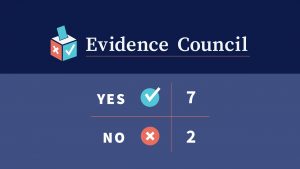
Q: Should Parental Permission Be Required for Minors to Use AI Companions?
Children and Screens Evidence Council Vote: 7-2 In Favor

AI and Children
A visual digest of current research on AI and children.
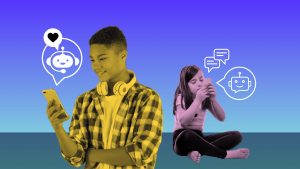
AI Companions and Kids: What You Need to Know
From late-night venting to homework help, the use of AI companions are becoming a part of everyday life for many tweens and teens. What does this mean for the ability to form real world friendships? What should parents and caregivers know about mental health and social development risks from the use of these types of AI technologies?
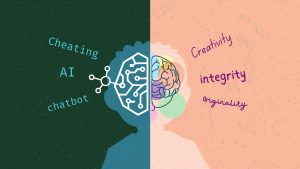
Raising Independent Thinkers in the Age of AI
Is AI use impacting the development of resilience, critical thinking, creativity, academic integrity, and intellectual curiosity in today’s youth? What happens to forming one’s own identity as a thinker when easy answers are just a few keyboard taps away?

Artificial Intimacy: What Happens When We Turn to AI for Connection? | Sherry Turkle, PhD
The False Promise of Tech and AI in Schools | Jared Cooney Horvath, PhD, MEd
The Science of Raising Humans in the Age of AI | Dana Suskind, MD
The Costs of Youth Attachment to AI Companions | Pilyoung Kim, PhD
Does AI Help Students Learn? | Adam Dubé, PhD